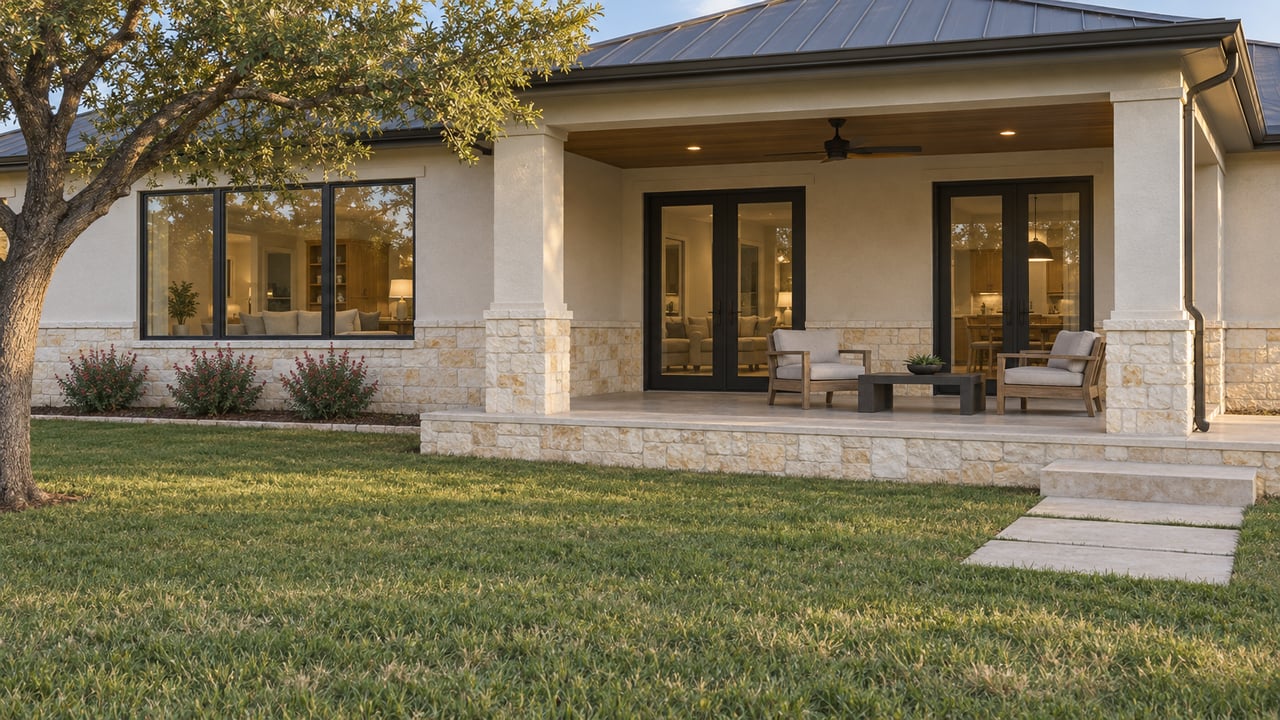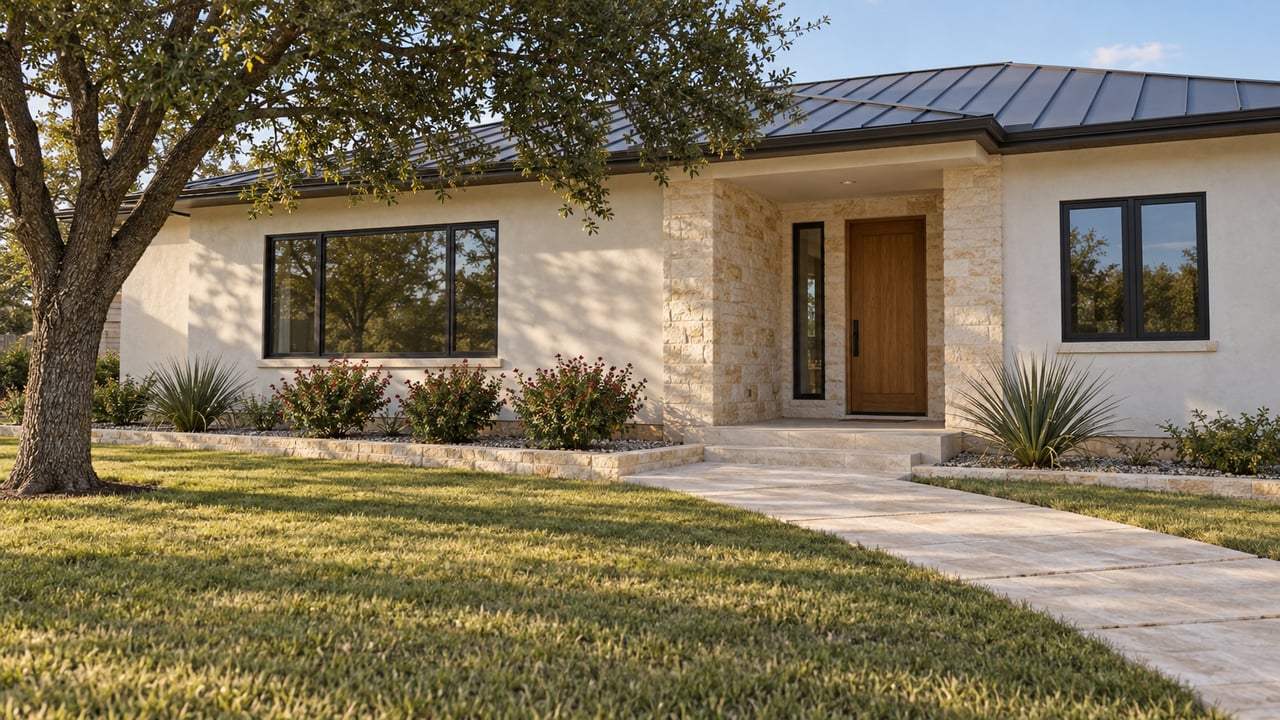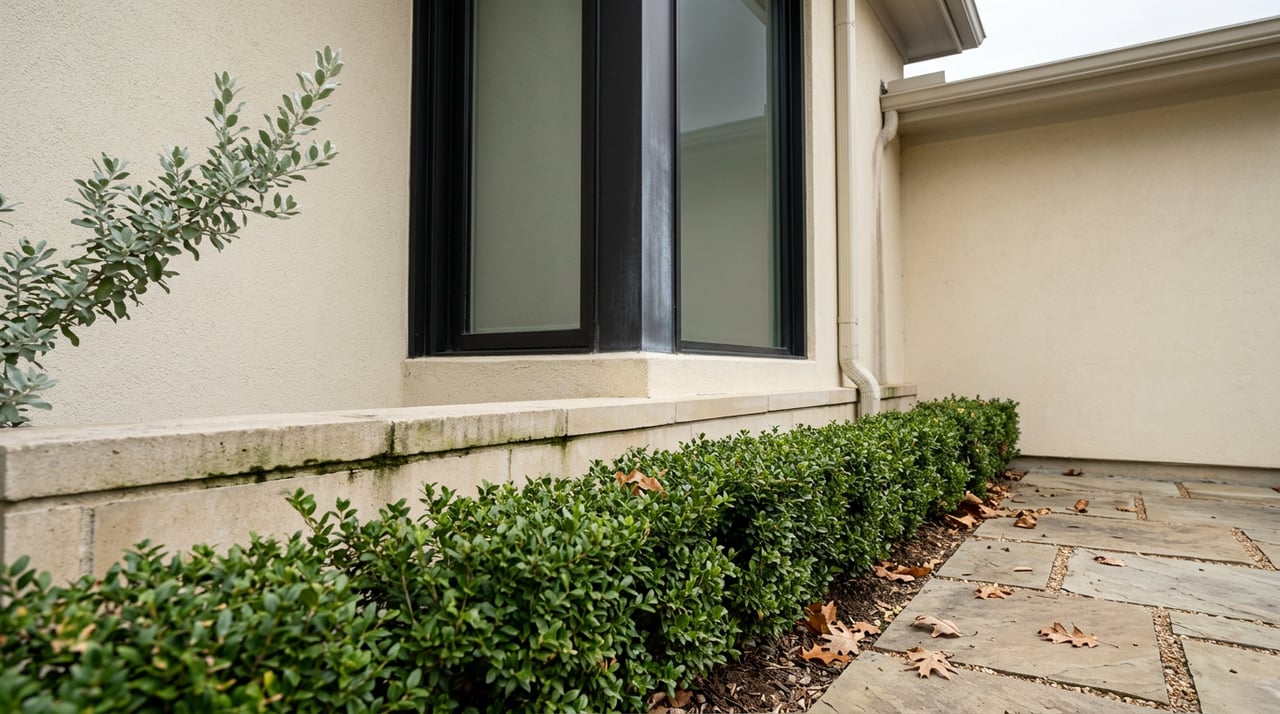
Drive west out of the Georgetown square and the ground under your tires is limestone, the same pale rock that built the courthouse and shaped the bluffs along the San Gabriel River. Keep driving east past I-35 and the color changes before the road does. The soil turns black, heavy, and slick after rain. That line running through the middle of Georgetown is the Balcones Escarpment, and it is doing more to determine what your future home inspection will find than the year the house was built.
Most advice about buying in Central Texas treats "expansive clay soil" as a single fact you either accept or don't. In Georgetown that framing misses the point. The clay problem here isn't one problem. It's at least three, and they show up in different parts of town with different symptoms, different repair histories, and different questions you should be asking before your option period ends.
Same City, Different Ground Underneath It
Georgetown sits right where the Edwards Plateau's limestone meets the Blackland Prairie's clay. That geological seam splits the city into distinct risk profiles.
West and central, on shallower limestone. Much of downtown Georgetown and the western portion of the Del Webb Sun City community sit closer to bedrock. Older pier-and-beam homes near Southwestern University, many built from the 1920s through the 1970s, weren't engineered for clay movement because they don't sit on nearly as much of it. Their failure mode tends to be wood: rotting joists, sagging crawl spaces, and pier settlement tied to moisture and age rather than soil swell.
East of I-35, on deep Taylor and Houston Black Clay. Subdivisions like Teravista, Wolf Ranch, Berry Creek, Serenada, and the Rivery area were built rapidly over some of the most reactive clay in Central Texas, engineers classify it as a Vertisol capable of swelling by a meaningful percentage of its volume when saturated and shrinking hard during drought. That swing shows up as seasonal slab movement: doors that stick in August and swing free in April, hairline cracks that widen after a dry spell and seem to close up again after rain.
Sun City, split down the middle. This is the piece that surprises people. Sun City isn't one soil profile, it's two. The western sections sit on more limestone-dominant ground, while the eastern sections encounter heavier clay, and irrigation from the community's lakes and golf courses adds a layer of moisture variability that neither the pure-limestone nor pure-clay areas have to deal with in the same way.
| Zone | Dominant Condition | What Typically Shows Up | What To Ask For |
|---|---|---|---|
| Downtown / Southwestern University corridor | Shallow limestone, pier-and-beam homes (1920s-1970s) | Wood decay, crawl space moisture, uneven piers | Crawl space inspection, moisture readings, pier condition report |
| Teravista, Wolf Ranch, Berry Creek, Serenada, Rivery | Deep Taylor/Houston Black Clay east of I-35 | Seasonal slab movement, sticking doors, cracks that widen and close with weather | Elevation survey, pier depth documentation, seasonal timing of the inspection |
| Sun City | Split soil profile, limestone west, clay east, plus irrigation | Localized movement tied to lawn and golf course watering | Ask which side of the community the lot sits on, review irrigation proximity |
None of this means one part of Georgetown is a better buy than another. It means the inspection strategy that works for a 1960s house near the square is close to useless for a 2015 build in Teravista, and vice versa.
The Disclosure Form Doesn't Know Which Zone You're In
Texas requires sellers of most residential properties to complete a Seller's Disclosure Notice under Property Code Section 5.008. The form asks a direct question about structural history, worded on the standard version as:
"Previous Structural or Roof Repair"
A yes answer there is common in Georgetown, and it should be. It's not a red flag on its own. What matters is what comes with it: when the repair happened, who did it, and whether there's an engineer's letter or permit attached.
Here's the part that trips up both sides of a transaction. Marking a property "as is" in the purchase contract limits the seller's obligation to make repairs. It does not limit the seller's obligation to disclose what they know. Those are two separate legal duties, and Texas courts have been consistent on the distinction, most notably in Prudential Insurance Co. of America v. Jefferson Associates, where the Texas Supreme Court held that an as-is clause can be set aside if the seller actively concealed a known defect. A seller who knows about a slab crack in a Wolf Ranch home and checks "no" anyway isn't protected by the as-is language in the contract. Buyers who discover a concealed defect can pursue remedies under the Texas Deceptive Trade Practices Act, which allows for damages beyond simple repair costs in cases of proven concealment.
The form doesn't distinguish between a downtown pier-and-beam settling issue and an east-side slab heave. That's on the buyer's side to figure out, which is exactly why a general home inspection in Georgetown is often step one, not the final word. A separate structural engineer letter, typically a few hundred dollars, is standard advice for a reason: general inspectors flag movement, but they usually aren't the ones qualified to say whether it's cosmetic or something that needs piers.
One More Line That Never Makes It Onto The Disclosure
Foundation history isn't the only cost buyers should be pricing in right now. Georgetown's water, wastewater, and stormwater rates are scheduled to rise on October 1, 2026, just days from now. The city's water base charge is going up 4 percent, volumetric water rates by 14 percent, and wastewater rates are projected to climb roughly 12 percent annually through 2031 as the city funds new treatment plants and compliance work tied to sitting over the Edwards Aquifer Recharge Zone. For a household using around 6,000 gallons a month, the typical bill moves from about $127.35 to roughly $139.65. Residential stormwater fees are set to go from $6.50 to $8.50 a month, climbing toward $10.50 by fiscal year 2029-30.
None of that shows up on a disclosure form or an inspection report. It's a separate line worth factoring into what a home in Georgetown actually costs to hold onto, especially if you're comparing it against a similar property in a neighboring city with a different utility structure.
What This Means During Your Option Period
If you're under contract on a Georgetown property right now, the practical version of all this is short:
- Find out which side of the escarpment your address sits on before you decide what kind of inspection to order.
- If the disclosure mentions any prior structural or foundation repair, ask directly for the engineer's report or repair receipt, not just a verbal explanation.
- Don't treat an "as is" contract term as a substitute for a complete disclosure. You're entitled to both.
- Time a slab-home inspection with the season in mind. A dry-spell inspection can miss movement that would be obvious after a wet month, and the reverse is also true.
- Factor the October utility rate change into your monthly cost comparison if you're weighing Georgetown against another Central Texas city.
A Few Straight Answers
Does every home in Georgetown need a separate structural engineer inspection? Not every home, but any property with disclosed foundation history, visible cracking, or sticking doors and windows is a reasonable candidate. A general inspector can flag the symptom. An engineer's letter is what tells you whether it's active movement or old, stable settling.
If a previous owner already repaired the foundation, is that a problem? Not by itself. A documented repair with an engineer's letter and a warranty is often a stronger position than a home with no history at all, because it means someone already addressed the issue and you can verify how.
Does the October utility rate increase affect what I should offer on a home? It's one more monthly cost to build into your comparison, similar to property taxes or an HOA fee. It's not something that should change your foundation questions, but it belongs in the same spreadsheet.
Georgetown rewards buyers and sellers who understand which version of this city's ground they're standing on. If you're weighing a property east of the interstate against one near the square, or trying to make sense of a disclosure that mentions prior repairs, I'd rather walk through it with you before you're locked into a deadline. LaTashia Mitchell has spent her career in these neighborhoods and can help you ask the right questions at the right time. Let's Connect.
This article is general information, not legal, tax or financial advice. Consult a qualified professional about your situation.